
Building a Strong Cybersecurity Culture: Your Workforce as a Defense
Key Takeaways:
-
Regular cybersecurity training can help employees recognize common threats such as phishing emails, suspicious links and unusual payment requests.
-
Clear reporting processes can help employees respond quickly to suspicious activity and feel comfortable speaking up when something goes wrong.
-
Limiting access to sensitive systems and using safeguards such as strong passwords and multifactor authentication can reduce security risks if an account is compromised.
Cybersecurity threats are a growing concern for businesses of all sizes, and many small business owners know the risks. In fact, 94% of small business owners say they’re knowledgeable about cybersecurity threats. Yet that awareness doesn’t always extend across the workplace. Less than half (42%) say they’ve provided formal cybersecurity training for their employees.
That can leave an important gap in a business’s defenses. Employees interact with emails, accounts, customer information and company systems every day, often putting them on the front lines when a potential threat appears. Without the right training and processes in place, employees may not know what to look for or what to do when something seems suspicious.
Building a strong security culture can help close that gap. When employees have the knowledge, tools and confidence to recognize and report potential threats, they become an important layer of a business’s cybersecurity defense.
Why Are Employees Critical to Your Cybersecurity Strategy?
Cybersecurity isn’t solely the responsibility of an IT team. Employees across a business make everyday decisions that directly impact security.
Cybercriminals know this, too. Rather than trying to break through sophisticated security systems, attackers may target employees with phishing emails, fraudulent requests, or other social engineering tactics designed to trick them into sharing information, sending money, or granting access to company systems.
Common threats targeting employees include phishing attempts, vendor impersonation scams and account takeover schemes. These attacks often rely on human interaction rather than technical vulnerabilities, making employee awareness and preparedness an important part of a business’s overall defense strategy.
In fact, Verizon's 2025 Data Breach Investigations Report found that the human element was involved in 60% of data breaches, highlighting how often cybercriminals rely on employee actions, mistakes or social engineering tactics to gain access to organizations.
When employees know how to recognize common warning signs, they can help identify potential threats before they cause damage.
Cybersecurity is most effective when it is treated as a shared responsibility across an organization, rather than something addressed only after an incident occurs.
What Should Employee Cybersecurity Training Include?
Employees can’t be expected to recognize cybersecurity threats if they don’t know what to look for. Regular training can help employees understand the risks they may encounter during the workday and give them clear steps to follow when something seems suspicious.
Training doesn’t have to be overly technical or time-consuming to be useful. Practical training can focus on situations employees may encounter during the workday, including: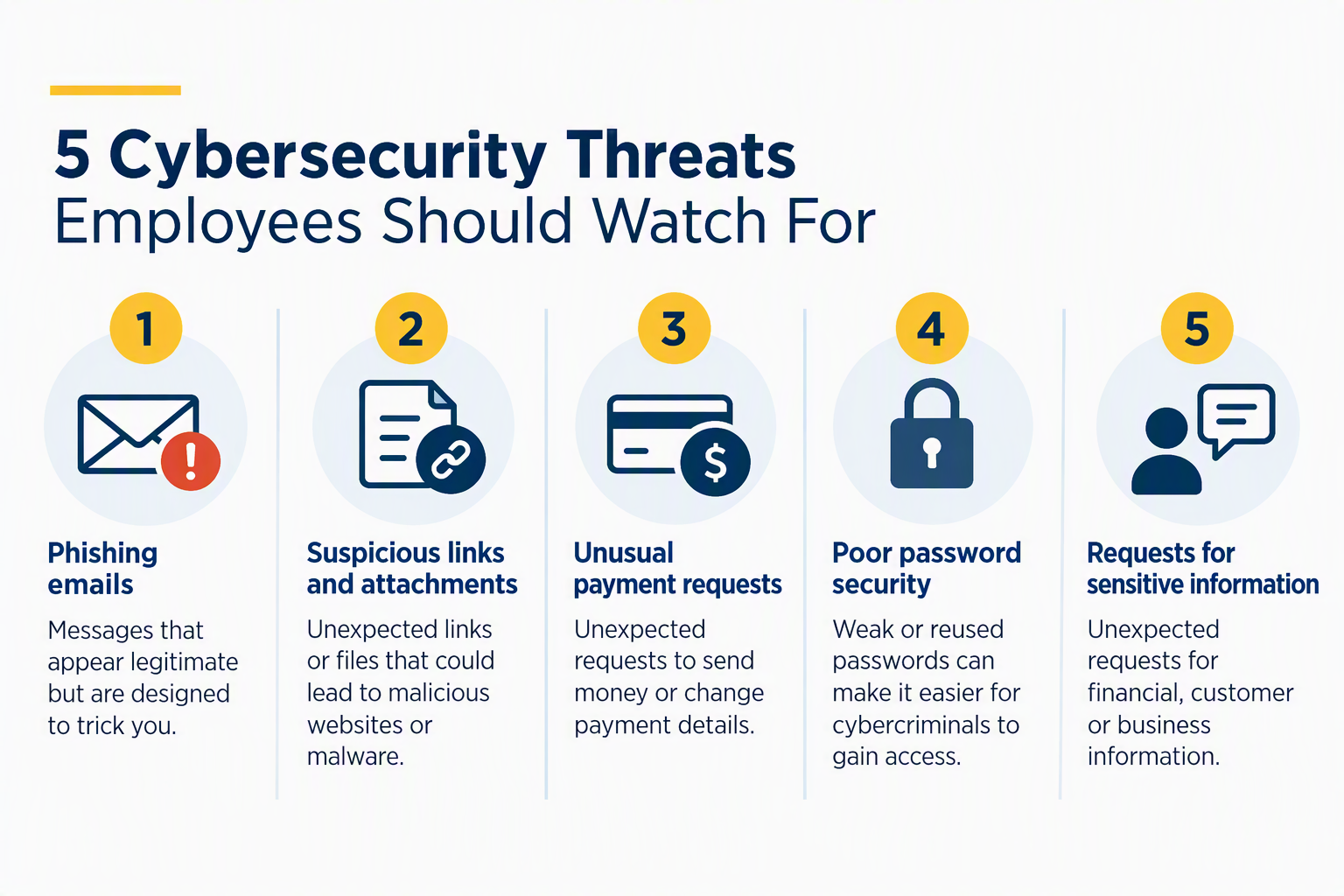
-
Phishing emails: Fraudulent emails designed to trick employees into sharing sensitive information or taking an unsafe action, such as signing into a fake website.
-
Suspicious links and attachments: Links or files that could lead to malicious websites or install malware when opened.
-
Unusual payment requests: Unexpected or urgent requests to send money, pay an invoice or change payment details, especially when they appear to come from a vendor or coworker.
-
Poor password security: Using weak or reused passwords can make it easier for cybercriminals to gain access to multiple accounts if one password is compromised.
-
Attempts to obtain sensitive information: Scammers may impersonate customers, vendors, coworkers or other trusted contacts to convince employees to reveal financial, customer or business information.
Cybersecurity training should also be an ongoing effort rather than a one-time exercise. Cybercriminals continually change their tactics, and employees may need reminders to keep security top of mind. Short refreshers, examples of emerging scams or periodic phishing simulations can help reinforce good habits without requiring lengthy training sessions.
New employees should also receive cybersecurity guidance as part of the onboarding process. From their first day, they should understand the types of threats to watch for and how to report anything suspicious.
How Should Employees Report Potential Threats or Suspicious Activity?
Recognizing a potential security threat is only the first step. Employees also need to know how to respond when they encounter one. Clear reporting processes are just as important as awareness. According to the Association of Certified Fraud Examiners (ACFE), fraud tips are twice as likely to come from employees who have received fraud awareness training compared with employees who have not received training.
Businesses should establish a simple, clearly communicated process for reporting suspicious activity, whether it’s an unusual email, an unexpected login notification or a request for sensitive information.
Employees should know who to contact and how to report a concern. Depending on the size of the business, that might mean forwarding suspicious emails to an IT team or manager or using a dedicated reporting system. Employees should also understand what immediate steps to take, such as avoiding clicking a suspicious link or responding to the sender while waiting for guidance.
Reporting procedures should also address what happens when an employee makes a mistake. For example, an employee who realizes they clicked a suspicious link should know to report it immediately rather than trying to handle the situation independently. Prompt reporting gives the business an opportunity to investigate and take steps to limit potential damage.
Just as important is creating an environment where employees feel comfortable speaking up when something doesn’t seem right. Employees should not be discouraged from reporting a mistake or suspicious activity out of fear of being blamed. Reinforcing that prompt reporting is an important part of protecting the business can help prevent potential threats from going unnoticed.
How Can Businesses Reduce Risk Through Access Controls?
Not every employee needs access to every account, system, or piece of sensitive information. Limiting access based on an employee’s role can reduce the amount of information at risk if an account is compromised.
Businesses should review access permissions regularly, especially when employees change roles or leave the organization. Additional safeguards can include requiring strong passwords and using multifactor authentication (MFA), which requires users to verify their identity in more than one way before accessing an account.
Cybersecurity Is a Shared Responsibility
Building a strong security culture doesn’t happen overnight. With regular training, clear security practices and an environment where employees feel comfortable reporting concerns, businesses can reduce risk and make their workforce an active part of their cybersecurity defense.
For additional resources to help protect your business visit, Old National’s fraud prevention resources.
