
How to Protect Your Business from Invoice and Vendor Fraud
Key Takeaways:
- Invoice and vendor fraud schemes are becoming more sophisticated, with scammers using fake emails, impersonation, and AI-generated messages to trick businesses into sending payments to fraudulent accounts.
- Small businesses can significantly reduce fraud risk by educating employees on red flags, verifying payment changes through multiple channels, requiring dual approvals, and regularly monitoring accounts.
- Banking tools like ACH Positive Pay, ACH blocks, and real-time account alerts can provide additional layers of protection against payment fraud.
Payment fraud is one of the biggest threats businesses face, and small businesses are especially at risk. U.S. companies lost 9.8% equivalent revenue to fraud last year, a 46% increase from 2024, according to a study from TransUnion. Fraud schemes are becoming increasingly sophisticated, as scammers leverage technology to impersonate vendors and internal executives and send fake invoices.
For small businesses, fighting fraud without significant cybersecurity resources can seem overwhelming. But fortunately, in the battle to safeguard your payments and company
financials, a little education can go a long way. Understanding the risks and implementing simple yet effective fraud-prevention strategies can help ensure your business stops fraudsters before they access your assets.
How Invoice and Vendor Fraud Work
At the root of an invoice or vendor fraud scam is a scammer impersonating a company that you’ve paid or owe money. However, the methods used to do so can vary. One of the more common types of invoice fraud begins with what’s called Business Email Compromise (BEC). The scammer creates a fake email from an executive within your own company. They then use that account to request an urgent payment to a vendor or to complete a strategic business acquisition.
In BEC cases, scammers often use personal details to convince an employee of their legitimacy. To do so, they may quote previous emails or reference details they obtained via social media. The rise of AI has added another level of sophistication, enabling criminals to create fake videos or voice recordings of executives providing directions to employees.
With other methods of invoice fraud, you may simply receive an invoice that appears to be coming from a known vendor or supplier. The invoice often asks for payments to be directed to a new, fraudulent account. In these cases, the scammers take over the vendor’s email or create one that looks nearly identical to the real supplier's email account and invoice. Regardless of how scammers try to obtain payment, once the money is transferred to them, they’re off to their next victim. Meanwhile, you’re left trying to reverse the payment or reduce the loss.
How to Prevent Invoice Fraud
For small businesses, no one strategy can prevent fraud, but employing multiple tactics can significantly reduce your risk. Consider the following fraud prevention strategies: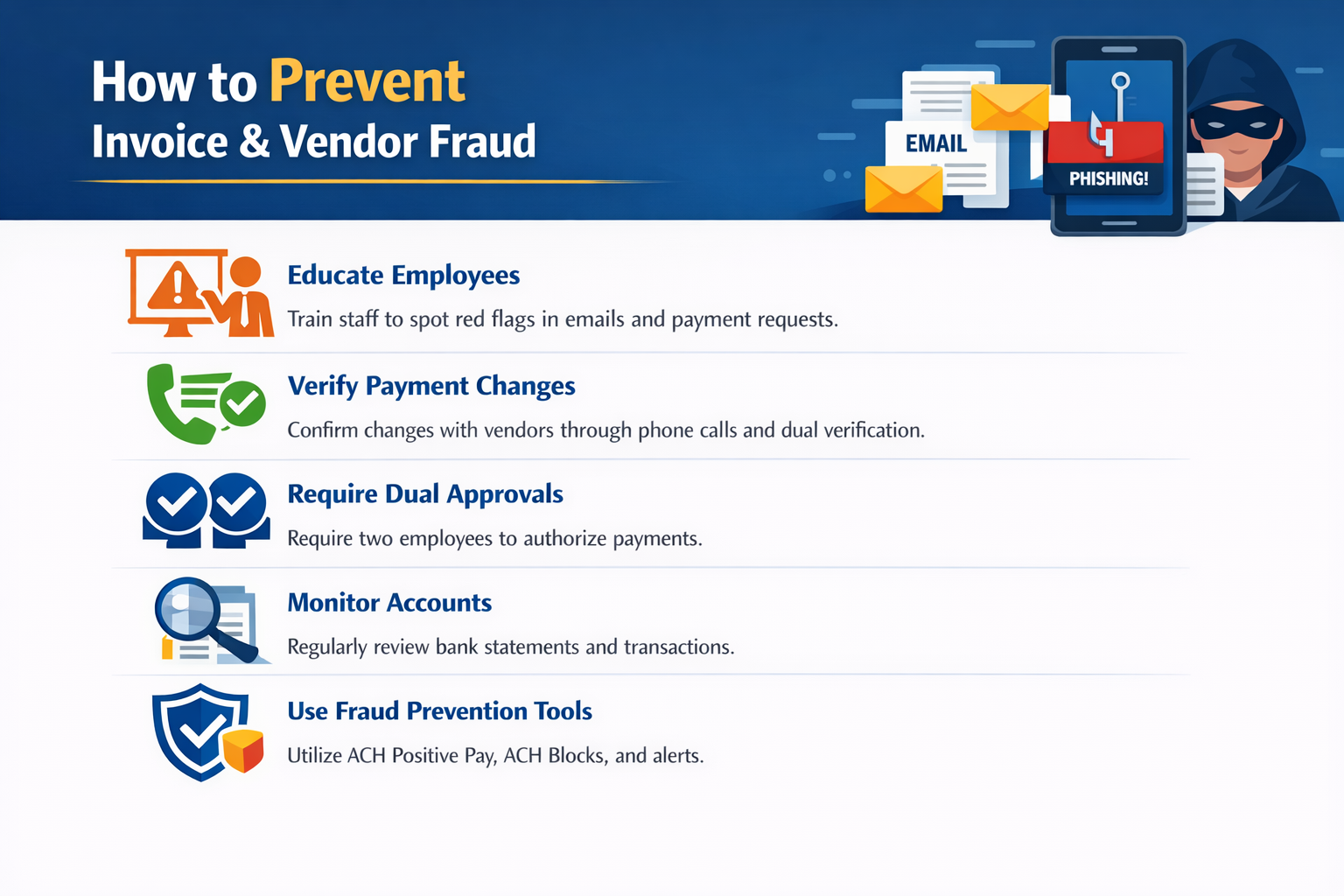
1. Educate Employees about Red Flags
A significant component of fraud prevention is understanding what types of emails or communications should raise suspicion. For example, the following merits a call to the vendor for confirmation:
- Requests to direct payments to new bank accounts
- Increased urgency regarding payment timelines
- New or unusual payment terms, such as paying with gift cards or sending payments to a bank account in another country
- Missing purchase orders or supporting documentation
- Mismatches with contract information or vague descriptions of work performed, product, or deliverables
- Subtle changes in email addresses, such as a missing letter or a changed domain
- Unprofessional formatting or generic greetings that don’t name your company
2. Implement Payment Change Protocols
Establish protocols for employees to follow when vendors request changes to their payment terms or timing. These may include verifying an email request by phone with the vendor or company to confirm additional details such as bank account numbers, addresses, and payment methods. It’s also smart to require two forms of communication to confirm a request, so if you receive an email, you verify by phone, and vice versa. Always check to ensure the email address, phone numbers, and other identifying information match what you currently have on file.
3. Require Dual Approvals
Mandating that two employees approve payment changes adds another layer of oversight that can help prevent fraud. A dual approval system means that the employee initiating the payment must have another employee approve it. The second employee logs into the payment system, reviews all payment details, and then confirms the transaction. Not only does dual approval make it harder for email scams to succeed, but it also prevents other types of payment fraud, including employee payment fraud.
4. Monitor and Reconcile Your Accounts
Keeping regular tabs on your company’s accounts and cash flow is a surefire way to identify potential fraud. For most small businesses, reconciling your accounting system with your bank accounts on a weekly or monthly basis helps you catch discrepancies such as unusual payments or amounts, new vendors, or out-of-order invoices.
5. Leverage Online Banking Tools
Old National provides additional controls and fraud mitigation tools to help reduce your risk of payment fraud. For example, ACH positive pay adds a layer of payment security by requiring manual review of electronic payments that don’t match a list of registered vendors. ACH block goes a step further by requiring manual review of all ACH entries posting to your accounts. Other services, such as real-time account alerts and customer support from our relationship managers, help you catch suspicious activity early and prevent fraud before it happens.
Invoice and vendor fraud are ongoing threats to small businesses. However, with a solid understanding of how payment fraud works and the right tools at your fingertips, you can reduce your risk and ensure that your hard-earned dollars don’t fall into the wrong hands.
For more ways to protect your business, follow this fraud prevention checklist and explore other security resources available to small businesses.
