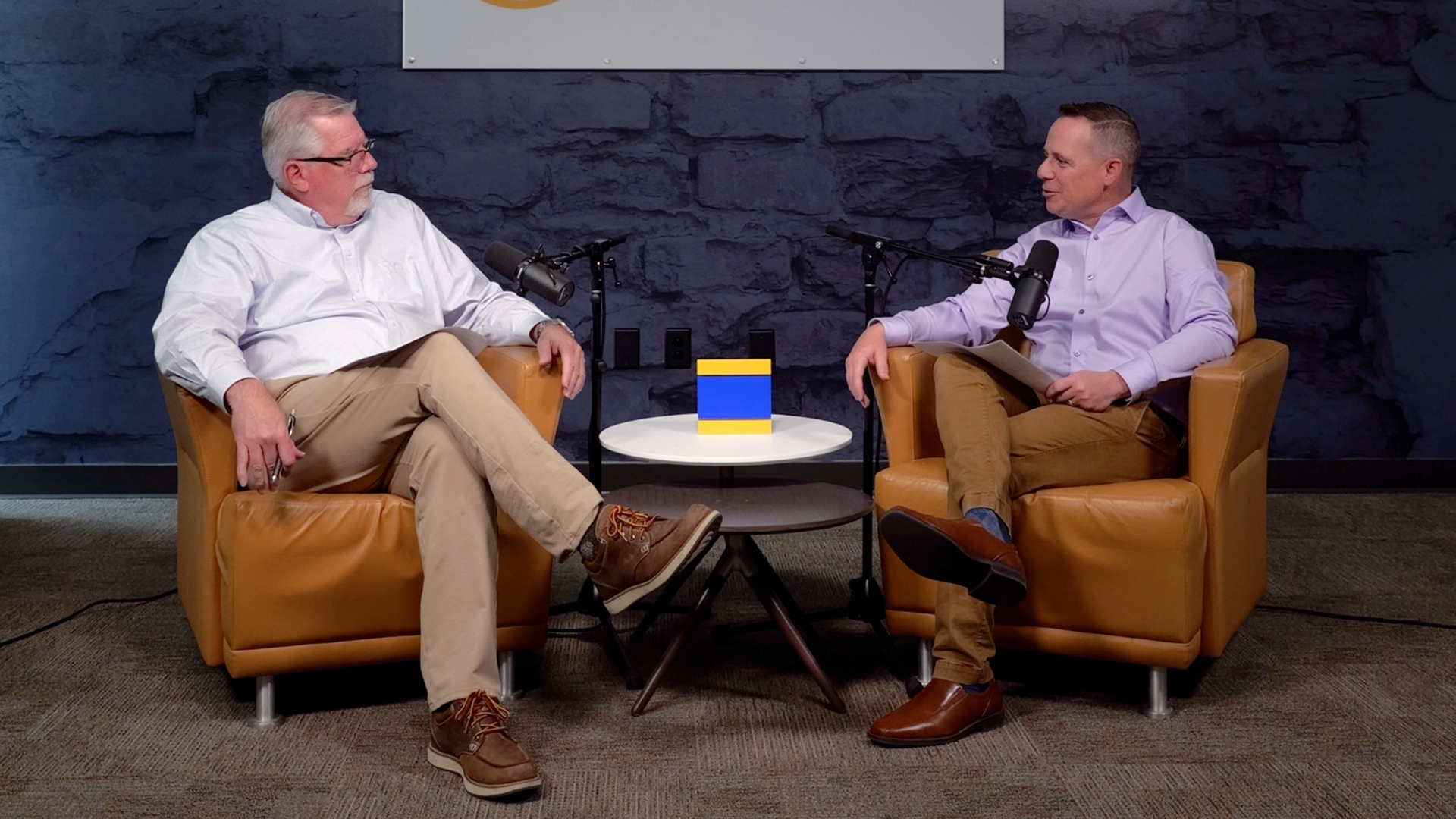
Real-Life Finance Podcast 19: Economic Pulse
Listen wherever you get your podcasts.
We sat down with Matt Finn to discuss what’s shaping today’s economy and what it means for consumers. From inflation and interest rates to tariffs, energy prices, housing, labor trends, and AI, Matt helps cut through the headlines and focus on the economic signals that matter most.
Read the transcript below, or click here to listen.
Ben Joergens:
Well, welcome back to another edition of the Real-Life Finance Podcast. I am your host, Ben Joergens, and I'm glad to be joined again by Matt Finn, our Old National Bank Chief Economist and Managing Director here. So today's episode, Matt, we're going to break down what really happens in the economy and what matters most for the everyday consumers. And I think we're going to discuss everything from inflation to interest rates to the global conflict, tariffs, labor market, but really with a focus on separating headlines from practical takeaways that people can use. So thank you again for coming back to the show first of all.
Matt Finn:
It's good to be back.
Ben Joergens:
We always love, and our guests do too, of getting an update. And we figured it was time to get an update here. So what I want to start with, Matt, is maybe what you see as the most significant change in the economy over the past year, and has it really gone to plan of what we expected?
Matt Finn:
That's sort of a loaded question. I mean, I think first off, tariffs, not gone to plan. The war, obviously in the Middle East, not gone to plan. AI, what's the plan? I'm not really sure. No. I think the economy has proven to be much more resilient in the face of all of these uncertainties than a lot of people thought it would be. Normally you get an oil price spike. The first thing people say is recession, but that's not happening. So we've had a lot of unusual events, the tariffs. Immediate impact is, well, that's inflationary. That's going to curtail consumer spending. But we haven't actually seen that. Clearly, consumers have been negatively impacted by higher prices. I don't want to make light of that, but not to the extent that it has somehow destabilized the economy.
Ben Joergens:
Yeah. No, that's a great point. And as we touch upon some of that stuff, like you mentioned Iran and the Middle East conflict, with the conflict evolving or involving Iran and raising really concerns about energy prices and inflation, what does the situation actually mean for everyday consumers and what impacts, if any, should people realistically expect to feel?
Matt Finn:
Yeah. At the individual consumer level, certainly at this time, we're seeing it in higher gas prices. And for most of us, there comes a choice. I can either spend more money on gas or I can spend more money on something else. So there's a lot of substitution effect going on. What's interesting though is when you look at overall retail sales, the number, at least this last month, wasn't too bad, but the composition, if you look at credit card data, the composition of what consumers are spending money on has clearly changed. They're spending more money on fuel, less money on other discretionary purchases. Total spend is still okay, but it's shifting. And if this persists with higher fuel prices, customers are going to eventually have to make hard choices about what to spend money on.
And that's where it starts negatively impacting other industries because your living room furniture might be ready for a refresh or an upgrade. Most people don't wake up one day and go, "Let's buy a new sofa." It's a process that you're thinking about for several months. And so higher gas prices don't mean, "Well, I was going to go out this afternoon and buy a new chair, but I decided not to do that since gas prices are up." But what it does mean is you're pushing that purchase off further and further into the future than you normally would have. And maybe the sales have to be bigger to attract that business, less profits, less... That's where it really starts to show up. The other thing though that I wanted to touch on is it's this concept called the oil intensity of GDP. Now that sounds like a really out there-
Ben Joergens:
It's a fancy word.
Matt Finn:
That sounds like a really out there economist kind of thing. But what we're talking about is how much oil do we consume in order to produce a given quantity of national output? Now back in the '70s when oil intensity peaked, it took around six or 700 barrels of oil to produce a million dollars worth of GDP.
Ben Joergens:
Really?
Matt Finn:
Today, that number is 350 barrels of oil to produce a million dollars worth of GDP because the US economy has become much more service oriented, somewhat less manufacturing oriented. So because the energy intensity of GDP is lower than what it was decades ago, the rise in oil prices hasn't been as dramatic. And so again, a lot of us thought, "Okay, if oil spikes over $100, that leads to a recession." Well, it did back in the '70s and early '80s. It doesn't anymore. The other thing that's happened, particularly since COVID, is that, believe it or not, cash bank deposits are higher than they've ever been. And so consumers most have a cushion of excess cash holdings that they can draw on, which has also mitigated another 25 cent word, but it has lessened the impact of this oil price spike on the economy.
Ben Joergens:
Yeah. A question I always get asked to me, Matt, is when you see a spike in the oil prices, how quickly does that pass along to where we really see the reflection in gas? I mean, it's not like an overnight thing a lot of times. I'm assuming there's a process where we see that change at the end.
Matt Finn:
Well, it is almost overnight because again, there's an economic theory that says the gasoline that a gas station has in the ground, that's already paid for.
Ben Joergens:
Right.
Matt Finn:
Well, it is almost overnight because again, there's an economic theory that says the gasoline that a gas station has in the ground, that's already paid for. Well, they have to make enough money off of that tank full to pay for the next tank full, which is why almost overnight gas prices jump because gas station operators are thinking, "Well, now wait a minute, I paid $2 a gallon for the gas I've got in the ground, but the next fill up is going to cost me $3.50, so they have to bump their prices today in order to have the cash to pay for the next load." And that's why gas prices seem to spike so fast and people think, "Oh, they're just gouging it." And it's like, "No, they have to make enough cash to pay for the next load." And then we all know they don't come down that fast.
Ben Joergens:
No, they don't.
Matt Finn:
They never come down that fast. That's a different economic theory, but they don't come down as fast. And so the other thing is, people understand there's a lot of products, plastics and other things, derivatives from oil. Now that does take a while to work its way through because so many manufacturers have the good sense obviously to lock in prices, to contract with their suppliers for a specific price level. And so that does take a while. This is the problem because what may happen is let's hope we get a resolution to the Iran situation. Oil prices moderate. It could be three or four months and prices will still keep going up because of this lag effect of these higher oil prices. And so really most of us, most economists are projecting that we're going to see some dislocations, higher prices, consumer choices, things like that, probably for the remainder of 2026. And then let's assume oil prices have moderated. 2027 should be a normal year, if there's anything normal.
Ben Joergens:
Exactly. We always wonder that. And we're getting ready to move into tariffs, Matt. But you mentioned one thing when you talked about consumer spending and the rise in prices and things like gas: the cushion of money in the banks. Do you see, from an economy side, that spending is also increasing in credit card debt to keep up with the lifestyle people are used to when prices jump in certain circumstances?
Matt Finn:
Yes. Across certain segments of our audience or across consumers, because at least again, at the time we're filming this, the stock market is hitting all time highs.
Ben Joergens:
Exactly.
Matt Finn:
So there's a wealth effect that is offsetting some of the higher prices. Now, unfortunately for many consumers, they don't have that wealth effect unless you have a 401(k) balance, unless you have an investment portfolio, unless you own a home, you're not seeing that wealth effect. And so those are the consumers that do have to make those hard choices because their credit card balances may have to go up.
Ben Joergens:
Sure.
Matt Finn:
The other thing is, again, this goes back to sort of econ 101. People tend not to budget based on month to month things. It's called a permanent income hypothesis where you have a job, you make a certain amount of money, you lead a certain lifestyle. Short term disruptions in that typically don't make you suddenly lurch from, I'm rich, I'm poor, I'm rich, I'm poor. If you still have a job, you tend to just live a lifestyle and yeah, your credit card debt may be a little higher, you didn't save as much, whatever. But until that becomes more ingrained and you readjust your permanent income hypothesis, then you typically don't see a lot of movement.
Ben Joergens:
Yeah, exactly. Well, let's jump into that topic of tariffs that we hear so much about lately. And the government is refunding billions of dollars in tariffs to businesses, not directly to the consumers, but what does this mean for household prices and should every day people expect a real relief at the checkout counter based on all this?
Matt Finn:
Well, keep in mind that first of all, the importers or the businesses paid those tariffs, actually paid them, like wrote the check to the government. Some of it was passed on to consumers. A lot of it wasn't. Some businesses just absorbed those higher prices. They took less profit because they couldn't immediately raise those prices against other goods that may or may not have components in them that were subject to tariffs. And so when you look at here in Southern Indiana, we manufacture a lot of furniture and things like that in Southern Indiana. Some of it has foreign components that are subject to tariffs. Some of it doesn't.
When you're competing on a national scale, you can't just pass those prices along immediately. So the long way around the block to your answer is businesses will probably just take that and reimburse themselves for lost profit opportunities rather than say, "Oh, I got a tariff check, so I'm going to lower the price of my product." It's typically not the way that happens. But if you look at it, then the other way, the business now has that money back, they can afford to maintain their employment level, they can continue to sell. So it all sort of works out, but I would not expect to see any sort of one-to-one correlation of this company got this much money for tariff relief, so we're going to pass it on to consumers.
Ben Joergens:
I would agree. It doesn't work that way. Let's dive into the world of mortgage rates and the housing market. We hear a lot about this on various news outlets and media and housing costs remain high, right? I mean, they do. So from home prices to monthly payments, what does this mean for everyday consumers that are really trying to buy rent or stay in a current home today?
Matt Finn:
Yeah. Interestingly, before we met today, I looked up to sort of reconfirm the conventional wisdom. Housing affordability is low and interesting. So of course, after COVID, home prices rose faster than wages, and we know that, and that led to unaffordability or less affordability. And additionally, interest rates went up because we had some inflation issues to deal with, and so mortgage rates went up. What has happened over the past six months, maybe a little longer, wages are actually rising faster than home prices. Home prices have actually, over the past one year, the median price of a home in the United States has actually come down just a bit. Wages are still moving a little bit higher. The problem when it comes to affordability though is now people are looking at a six and a quarter, six and a half percent interest rate on top of-
Ben Joergens:
Versus the 3% we had during COVID, right?
Matt Finn:
Right. And so I talked about that with my team and I said, I remember back in the '80s, people were paying 11% or 12% for housing and that was outrageous. But by the same token, pre-COVID, people were paying 2.5% or 3%, which is also ridiculous.
Ben Joergens:
Outrageous.
Matt Finn:
So the reality is probably somewhere in the middle of that range is where house interest rates, mortgage rates need to settle in, probably in that 6% to 7% range. I think a lot of people who are saying, "Boy, I'm going to do something as soon as mortgage rates get back under 4%," they're going to be waiting a long time.
Ben Joergens:
It's going to be a while.
Matt Finn:
It's not happening. And supply and demand still works in the economy, whereby housing affordability hit an all-time low. There were a lot of people in the last couple of years who were shut out of the housing market. That has now started to get a little bit better. And in fact, in some areas of the country, not in California, not in New York perhaps, but in some areas of the country, particularly the Midwest, housing affordability, meaning a family that is making the median wage in this country, can now afford to buy the median-priced home in this country. And that's a big hurdle that we needed to get to. Now again, on the West Coast, housing affordability is still bad. In the Midwest, it's pretty good. In the South, it's pretty good. So we're starting to turn the corner there, but the big thing is, sure, house-price appreciation along with higher interest rates really put that out of reach for a lot of first-time homebuyers.
Ben Joergens:
And well, then the property taxes went up too, right? So then you've got to figure that into your payment as well.
Matt Finn:
And so they're just now getting to the point where it's becoming affordable again, but it's a slow process.
Ben Joergens:
Yeah, it does. It's not something that it's a quick fix or changes overnight.
Matt Finn:
Right.
Ben Joergens:
So Matt, let's move into the world of labor and productivity trends. We hear a lot about layoffs in the headlines, and layoff headlines can be unsettling. It can make people scared and nervous, especially alongside rapid advances in AI. For everyday workers, how much of this is structural change versus short-term adjustment? How should people interpret these signals?
Matt Finn:
Well, America's getting older. 10,000 people a day turn 65 in the United States.
Ben Joergens:
Really?
Matt Finn:
For the next decade, 10,000 people a day.
Ben Joergens:
Wow.
Matt Finn:
The number of people over the age of 80 in the United States is growing by 54% over the next 10 years.
Ben Joergens:
Oh, my goodness. Wow.
Matt Finn:
So America's getting older, which means we have less labor force participation, we have fewer young people getting into the labor force. This whole AI thing better work or we're in trouble because there are not enough people to keep your GDP growing. So in other words, if you want your economy to grow, you can either throw more labor at it, which we don't have, or you can make each worker more productive so that each worker produces more and your economy still grows. The way we make each worker more productive is not to work them harder, it's to work them smarter and using AI tools. And I go back to the example of decades and decades ago, when you went to a bowling alley, there was a kid sitting in the back called a pin setter and when you bowled, they jumped down into the pit and they gathered up the pins.
Ben Joergens:
That was my first job, by the way.
Matt Finn:
Was it really?
Ben Joergens:
I worked in the bowling alley, my first job.
Matt Finn:
Okay. So some fine folks at AMF invented automatic pinsetters. And I think, did everybody complain, "Oh, we've thrown all these pinsetters out of work." Well, the people who engineered the machine, the people who built it, the people who installed and maintained it, all made more money than the pinsetters that they put out of work. And so the economy went up, right?
Ben Joergens:
Created more jobs.
Matt Finn:
It created more jobs because you had to have people designing this, building it, installing it, maintaining it, all at higher wages because they were much more skilled than some kid jumping down into the pit and grabbing pins, which by the way, I did.
Ben Joergens:
Did you too?
Matt Finn:
I did. I did. And so I think about things like that. And if you really go through the economy over the years, I mean, we invented the transistor, we invented the mainframe computer, we invented computer chips, the personal computer, the internet, and at no point in time did we say, "Oh, this is going to throw thousands of people out of work or millions of people out of work." Because again, if you invented something and it suddenly made people worse off, we'd stop doing it.
Ben Joergens:
Exactly.
Matt Finn:
And so I think the AI fear is for some professions, for some professions, right? 35, 40, 50 years ago, if you took the time as a secretary to learn shorthand, well, yeah, your job got replaced, but it was so gradual that almost nobody noticed it. And what companies are finding, the most AI intensive companies are coming to the realization very quickly that you have to have experienced people interpreting those results and monitoring those results and knowing what to do with that. And so they're actually finding that this is not the big bugaboo that people thought it might be.
Ben Joergens:
Could be creating more jobs in a lot of places.
Matt Finn:
I think it will definitely create more jobs. It may displace the pinsetters among us, right? But that's not the whole economy, right?
Ben Joergens:
And bowling, it gave you some time to spare.
Matt Finn:
That's right.
Ben Joergens:
Well, no, it's a great way to look at that. And I think that helps our listeners think about it. We always hear the fears of AI taking away everything, but it sounds like a great opportunity for a lot more potential jobs as well.
Matt Finn:
Oh, I think it will.
Ben Joergens:
Yeah, I agree. So let's dive into the world of inflation, another hot topic that we've been talking about for a while now. As we look ahead, Matt, what would need to happen for the Fed to really feel comfortable about cutting rates later this year, and maybe what should consumers watch versus ignore in that case of inflation?
Matt Finn:
Well, we touched on that with oil, right?
Ben Joergens:
Yeah.
Matt Finn:
Things have to stabilize, moderate here. In monetary policy, there's a concept of the neutral rate, a rate of interest that neither restricts economic growth nor unnecessarily stimulates it. It's just sort of accommodating it, right? Everything is at a status quo and the rates are neither too low or too high. It's very difficult to know in advance what that rate is. You just sort of have to observe it and say, "Is the Fed too restrictive? Is the current level of interest rates holding back economic growth?"
I think the answer there is probably not to the extent that other things are holding back economic growth right now, tariffs, oil prices, things like that. So once the Fed gets more clarity on a stabilized economy and assuming that my earlier statements are correct and that AI doesn't result in a ramp up in unemployment, I think the Fed would be comfortable dropping rates a little bit. But again, I go back to the mortgage conversation, which is, well, clearly short-term Fed fund rates at eight or 9% are too high. They may be necessary at some point to curtail inflation, but as a norm, they're too high. Clearly, Fed funds at zero-
Ben Joergens:
Too low.
Matt Finn:
... is too low. So historically, if you look at 50 or 60 years worth of data, the Fed funds rate tends to run one and a half percent above the rate of inflation. So if the Fed is successful, if the economy is successful at getting interest rates, or I'm sorry, getting inflation down to 2%, then you've got some room to lower the current Fed funds rate. But I don't look for much in the way of future cuts. I'm in the camp of, I think somewhere between three and a quarter and three and a half is probably the good spot.
Ben Joergens:
I agree. I think you're right. I don't anticipate anything drastic.
Matt Finn:
No, we all want to go back to zero interest rates and 2% mortgages.
Ben Joergens:
Well, when you look then, that's a good sign for your economy.
Matt Finn:
You got to think about why did we have to do that?
Ben Joergens:
Exactly.
Matt Finn:
It was because bad things were happening. We needed to stimulate the economy.
Ben Joergens:
Yes, exactly. Well, as we kind of do a wrap up, Matt, looking ahead for the remainder of this year, what should everyday consumers keep an eye on and what can they safely tune out when it comes to the economic headlines out there?
Matt Finn:
I think, honestly, as an indicator, things I watch are from week to week, there is weekly unemployment claims. So it's high frequency data, and it tells us how many people at any given point in time are looking for a job. And part of that release is what's called continuing claims, which is how many people are filing for unemployment for the second or third or fourth week. And both of those, surprisingly, have been trending lower, right? The labor force is roughly 177 million people. Something less than 220,000 people a week file for unemployment claims. It's very low historically.
Ben Joergens:
It is low.
Matt Finn:
If we see a sustained rise, three, four, five, six weeks in a row of that number starting to move higher, people get nervous because what that implies then is that the next employment report may go a little higher. So high frequency data like that, obviously keep an eye on oil prices. It's a proxy for, are we winning in Iran? If eventually oil prices moderate, and again, don't hold your breath for $60 oil, be happy with $75 oil, right? But if they come down from 100 to 75, that's a good sign. It means things are calming down. If high frequency data, like the weekly initial jobless claims start to come down, that's a good sign as well. But I think overall, yeah, just try not to watch too much television.
Ben Joergens:
I agree. I agree. Control what you could control, right?
Matt Finn:
Control what you can control and don't get caught up in a lot of hype. The other thing that's going to come out obviously later this year is the midterm elections.
Ben Joergens:
Oh, yeah.
Matt Finn:
People put a lot of stock in that, but in reality, again, the bigger issues that I talked about, AI, the aging of America, that's going to happen whether the Democrats or the Republicans-
Ben Joergens:
Doesn't matter.
Matt Finn:
It doesn't matter. And there's an old joke with a lot of us in business, the more the politicians are fighting, the less they get done, which is probably pretty good because it means they're fighting and they're leaving us alone and there's not a lot of ... Well, there's not a lot of new tax law changes, there's not a lot of regulation changes, so the economy can go on and let the politicians fight it out.
Ben Joergens:
There you go. There you go. Well, love it. Matt, I always appreciate your insight. You bring a lot of knowledge to our viewers and listeners, and I love being able to do this update every so often.
So we'll have you back on soon again, but thank you for your wisdom and your expertise as our chief economist here at Old National Bank.
Matt Finn:
Well, thanks. Always a lot of fun to be here. Appreciate it.
Ben Joergens:
Well, good. We'll see you back soon. Okay?
Matt Finn:
All right.
Ben Joergens:
As we wrap up today’s episode, here’s the big picture in plain English: what’s happening in the economy and what it means for everyday decisions. Our guest was Matt Finn, chief economist and managing director at Old National Bank. The focus was separating headline noise from the signals that matter. Matt noted that the economy can look mixed depending on the data you follow, so it really helps to focus on the fundamentals: prices, borrowing and job stability rather than day-to-day market noise. On global conflict involving Iran, the reminder was simple: Events can spike energy prices, but the real impact depends on whether higher costs stick around. Watch the trend, not just the breaking-news alerts. On tariffs, refunds to businesses do not automatically mean lower checkout prices. Household costs still depend on competition, supply chains and overall business expenses, so don’t budget based on tariff headlines alone. Mortgage rates easing could be a helpful window, but it doesn’t instantly fix affordability. Buyers should still weigh rates alongside prices and inventory. Homeowners could revisit refinancing or timing, but should assume rate moves can change. On layoffs and AI, Matt cautioned that individual layoff headlines aren’t always a broad warning sign. Some shifts are short term, others are structural, so track bigger signals like unemployment, wage trends and demand in your field, and keep your skills current. On inflation and the Fed, the bar for rate cuts is sustained progress, not one good report. Key things to watch: inflation over time, job growth, wage pressure and whether borrowing costs are easing in a lasting way.
To listen to the podcast episode or to check out all the Real-Life Finance podcast episodes, click here.
