
When a CD Ladder Makes Sense - and When it Doesn't
Key takeaways:
-
A CD ladder spreads your savings across multiple CDs with different maturity dates, offering predictable returns, periodic access to your money and flexibility as interest rates change.
-
A CD ladder can reduce interest rate risk and is typically protected by FDIC insurance, however, early withdrawal penalties and inflation can still affect your overall returns.
- According to Ben Joergens, a CD ladder can be especially useful when interest rates are uncertain because it allows savers to reinvest portions of their money at regular intervals rather than making one large timing decision.
Certificates of deposit (CDs) can be a simple, low-risk way to grow your savings. When you open a CD, you leave your money with a bank for a set term in exchange for a fixed interest rate. This provides predictable returns, though you’ll typically pay a penalty if you withdraw the money before the CD matures.
Rather than placing all their savings into one CD, some savers use a strategy known as a CD ladder. A CD ladder spreads money across multiple CDs with different maturity dates. The goal is to earn competitive returns while maintaining regular access to your savings and managing the uncertainty of changing interest rates.
Understanding how a CD ladder works, along with its benefits and potential drawbacks, can help you decide whether it fits your financial goals and savings timeline.
What is a CD Ladder?
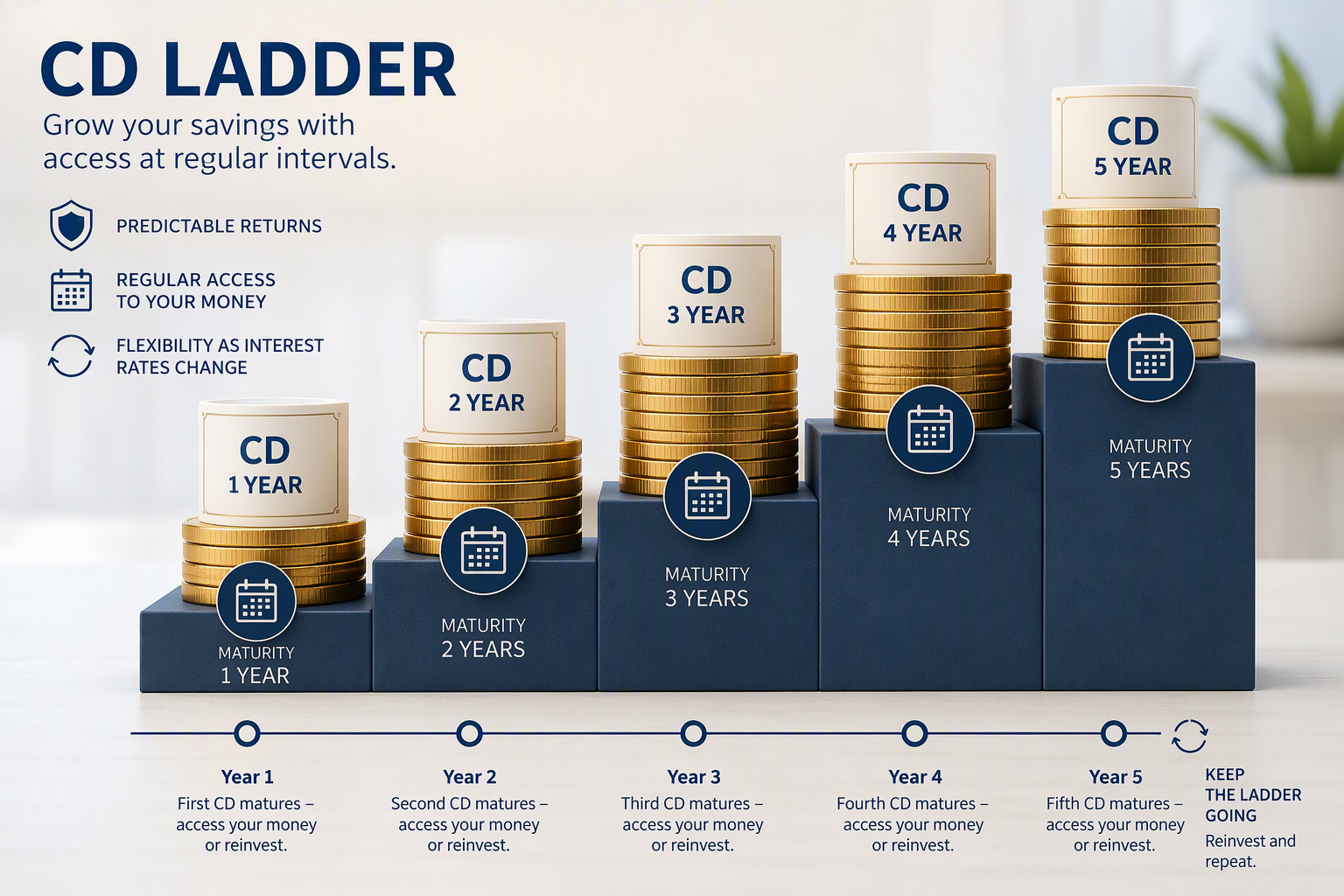
A CD ladder divides your money among several CDs with different terms. For example, instead of placing $10,000 in one five-year CD, you might open five $2,000 CDs with terms ranging from one to five years.
As each CD matures, you can withdraw the money or reinvest it in a new, longer-term CD. This creates a “ladder” in which portions of your savings become available at regular intervals.
One of the biggest advantages of a CD ladder is that it reduces the pressure of trying to time interest rates perfectly. Instead of making one large decision today, you're creating multiple opportunities to reinvest as market conditions change.
Should I Use a CD Ladder?
A CD ladder can be a good fit if you want predictable returns while maintaining some access to your savings. As each CD matures, you can reinvest at current rates or use the money for another goal.
I typically recommend laddering for customers who have savings goals three years or more into the future and want a balance between accessibility and predictable returns.
A CD ladder may also make sense if you:
-
Prefer steady returns over market risk. CDs earn a fixed rate for their term, which may appeal to conservative savers who value stability.
-
Want to reduce interest rate uncertainty. Because your CDs mature at different times, your savings aren’t all locked into one rate. If rates rise, you can reinvest maturing CDs at higher rates. If they fall, longer-term CDs may continue earning previously locked-in rates.
A CD ladder may not be the right choice if you expect to need most or all of your savings in the near future. While the staggered maturity dates provide periodic access to some of your money, a large portion of your savings will still be tied up until each CD matures. If you need to withdraw funds early, you'll likely have to pay an early withdrawal penalty, which can reduce your earnings.
It may also not be the best strategy if you're investing for long-term growth and are comfortable taking on more risk. While CDs offer stability and consistent returns, they typically don't provide the same growth potential as investments like stocks or mutual funds over longer time periods. Depending on your financial goals, a more diversified investment strategy may better align with your objectives.
Can You Lose Money in a CD Ladder?
In most cases, you won’t lose your original deposit if you hold each CD until maturity. Each CD earns a fixed rate for its term, regardless of broader interest rate changes. However, there are a few situations where a CD ladder could cost you money or reduce your overall returns:
-
Early withdrawals. Most CDs charge a penalty if you withdraw money before maturity. The penalty may reduce some or all of the interest earned.
-
Inflation. Your account balance may grow while losing purchasing power if inflation exceeds your CD rate.
-
Rising interest rates. You won’t lose principal, but you may miss higher rates offered after you open a CD. A ladder helps limit this risk because portions of your money mature regularly.
CD ladders can be FDIC insured when the individual CDs are held at an FDIC-insured bank and your total eligible deposits remain within applicable limits. That means your principal and accrued interest are protected if the bank fails.
What Happens if Interest Rates Rise or Fall?
A CD ladder can help you manage changing rates without trying to predict where they are headed.
When rates rise, a ladder allows portions of your savings to mature regularly so you can take advantage of higher rates over time instead of being locked into a single rate for years.
If rates fall, CDs opened when rates were higher will continue earning their fixed rates until maturity. However, CDs you renew later will likely earn less.
A ladder won’t maximize returns in every rate environment. Instead, it spreads interest rate risk across several maturity dates while providing consistent returns and periodic access to your savings.
Finding the Right Savings Strategy for You
A CD ladder can offer a balance of predictable returns, regular access to savings and flexibility as interest rates change. Whether it makes sense depends on your financial goals, cash flow needs and how long you can leave your money on deposit.
If you’re considering opening a CD or building a CD ladder, speak with a personal banker about available CD options or try our CD ladder calculator. A personal banker can help you compare current rates and terms and determine which approach best supports your goals.
About the Author
Ben Joergens is Director of Financial Empowerment at Old National Bank and a Certified Financial Education Instructor with over 26 years of banking experience. As a nationally recognized financial educator, Ben received the ABA George Bailey Distinguished Service Award (2015) and the NFEC Financial Educator of the Year Award (2017).
He specializes in helping consumers build financial confidence and achieve their financial goals. In addition, Ben is the host of Old National's Real-Life Finance Podcast, which focuses on everyday financial solutions that empower listeners to build the financial future they richly deserve.
